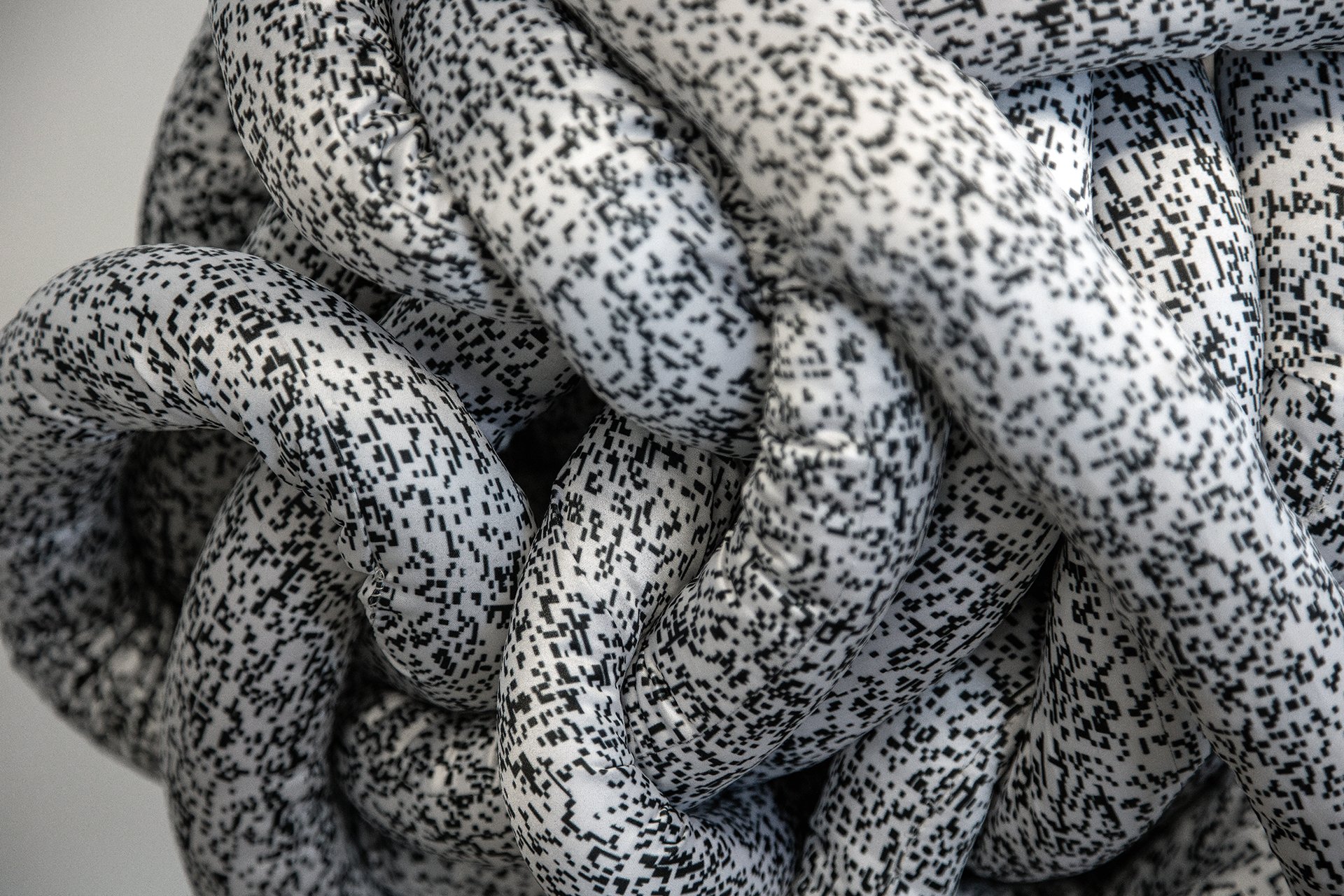
Syphilis Plush
Syphilis Plush is a soft sculpture composed of undulating textile tubes printed with a pixelated mosaic generated from the genome of Treponema Pallidum, the bacterium responsible for Syphilis. The textile surface is digitally printed with a genetic visualization produced through TouchDesigner (TdRNA). Combining biological data, computational image-making, and handcraft, the work translates an organism usually encountered through medical imaging and the language of disease into a bodily scale and tactile form. Its patterned surface makes genetic information available through an intimate sculptural encounter, bringing the invisible life within and around us into the space of touch.
Previously gathered into a knot, the sculpture’s tubular forms unwind and extend outward. Their arrangement changes through handling, making contact part of the work’s composition. Softness and surface invite proximity to a subject more commonly approached through fear, shame, or clinical distance. The work holds that attraction alongside the risks and histories of microbial intimacy, asking how affection, vulnerability, and responsibility shape our relationships with organisms that move between bodies.
The sculpture is also conceived as a memorial to those harmed by the United States Public Health Service’s syphilis study at Tuskegee. Conducted between 1932 and 1972, the study denied Black men informed consent and withheld effective treatment. This history places the work’s invitation to touch within a more difficult consideration of medical authority, racialized exposure, and the withholding of care. The bacterium is not the only subject of scrutiny: the work also addresses the biopolitical systems through which disease is studied and human lives are made expendable
Dimensions: 17 CM x 580 CM
Edition of 1