SKETCHING IN HARDWARE
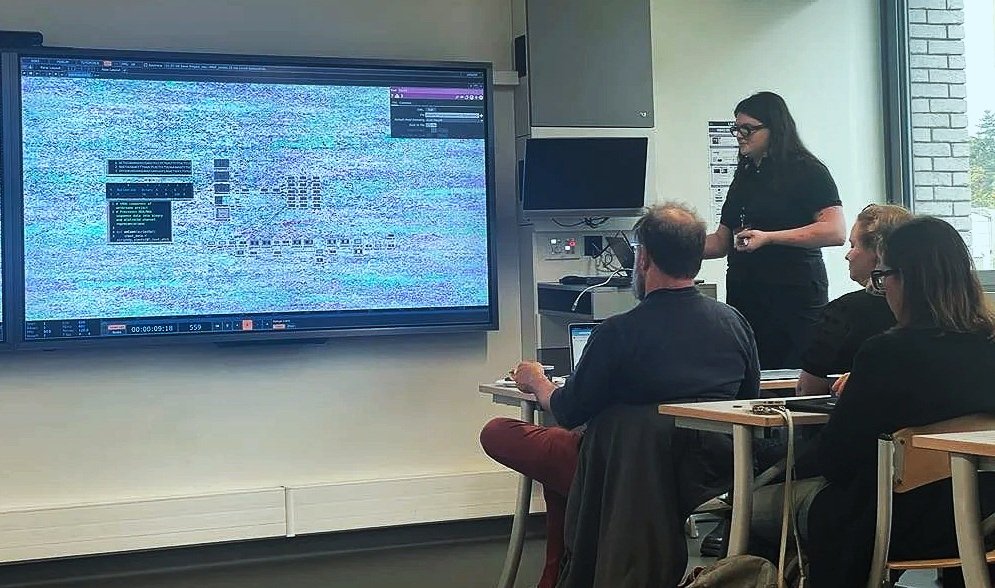
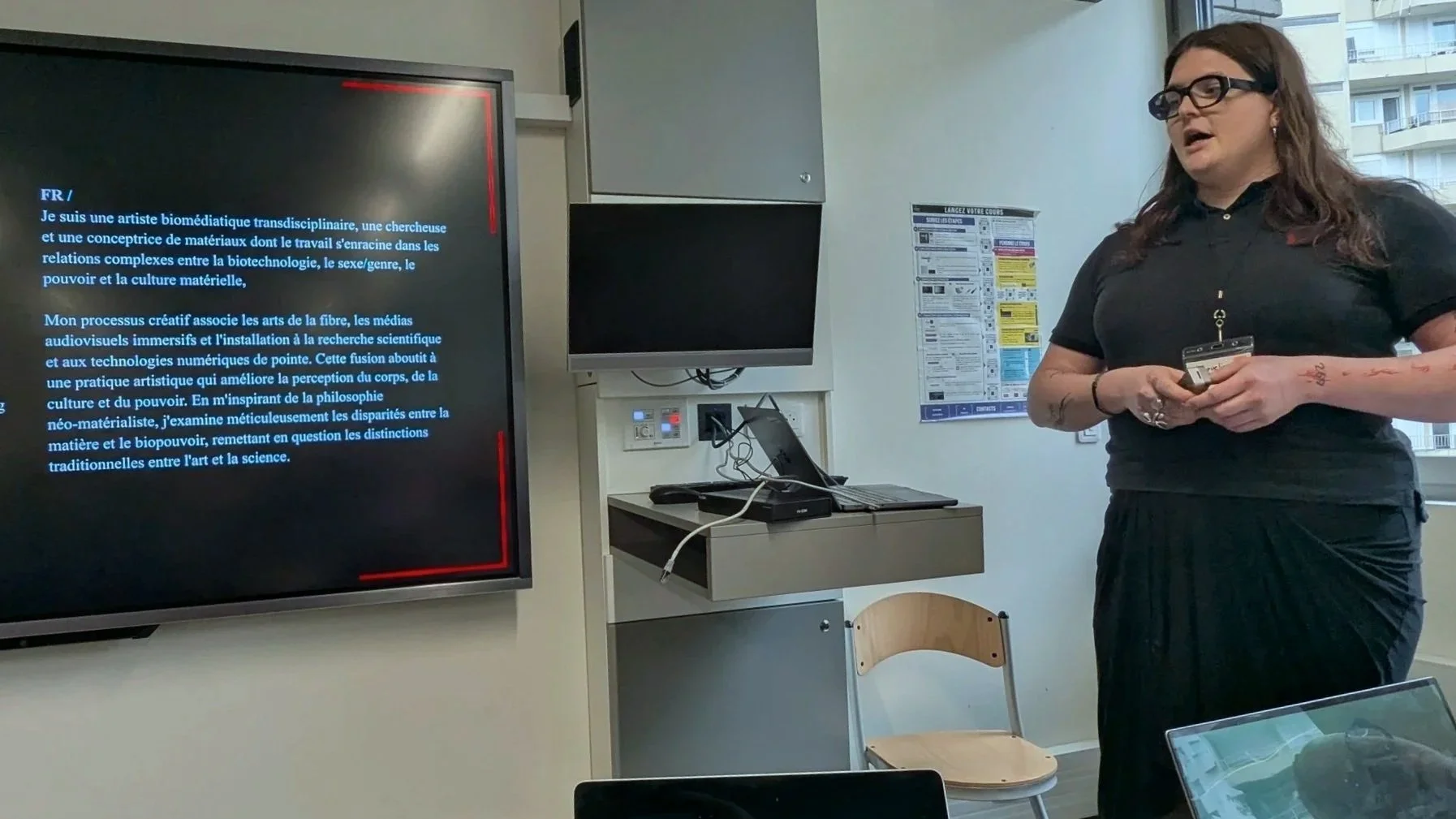
During my presentation at Sketching in Hardware, I talked about my practice as a biomedia artist and MA student at Concordia University. My practice has always lived at the intersection of the tangible and the microscopic—I work in fiber practices, transforming genetics into textile objects you can touch, see, and experience in physical space. Over the past few years, I've been working with genetic material in unexpected ways. I've taken the genomes of H1N1 bird flu and swine flu and translated them into fiber projects. Using a digital jacquard loom, I've woven a series of tapestries that visualize the genetic sequences of various organisms—HIV, honey bees, COVID-19, cuttlefish, and others. When you look at these tapestries, they appear almost like television white noise or incredibly complex QR codes, patterns that hold within them the literal building blocks of life.
My current project, Wet Dreams, takes this exploration of invisible biological material into an entirely new realm. Instead of working with isolated genomes, I'm DNA-analyzing the collective breath of dancers on a dance floor, capturing something ephemeral and intimate—the microbiome we exhale and share in moments of physical expression and community. The inspiration comes from Mariko Mori's Wave UFO installation, which used EMG readings to create audiovisual visualizations projected onto a dome, François-Joseph Lapointe's Holy Microbiome, which examined bacteria at religious pilgrimage sites, and Edit Architecture Collective's D.A.M.P., which collected excess water from air conditioning units and created moments where inhabitants could encounter it. Technically, I'm using a MinION Portable Genetic Sequencer—a palm-sized device that can analyze DNA in as little as 45 minutes, the same technology used on the International Space Station. A dehumidifier collects the moisture and microbiome genetic information from the dance floor environment. The MinION software outputs a text file that feeds directly into TouchDesigner, which I've programmed to transform the DNA sequences into four-channel visualizations. In this way, Wet Dreams makes visible the invisible ecosystem we create together when we dance, breathe, and share space—turning the poetry of collective biology into light, pattern, and presence.